Health Insurance Open Enrollment: Medicare and Marketplace Dates
Health insurance plays an important role in helping protect your health and finances. But between changing premiums, evolving coverage options and unfamiliar insurance terms, understanding your benefits isn't always straightforward.
The health insurance landscape is also experiencing significant changes. Some major insurance carriers are exiting the Health Insurance Marketplace entirely or in certain states, while others are reducing their participation or limiting available plans. Combined with ongoing concerns about healthcare costs, these shifts may leave some consumers with fewer choices or the need to find a new insurance provider.
Health insurance open enrollment gives you the opportunity to review your options, understand what's changing and make decisions that better reflect your needs.
Whether you're covered by Medicare or exploring the Health Insurance Marketplace, a little preparation can help you approach enrollment with greater confidence.
What Is Health Insurance Open Enrollment?
Open enrollment is the time each year when you can enroll in certain health insurance plans, renew coverage or make changes without needing a qualifying life event.
It's also an opportunity to make sure your current coverage still works for you. Your healthcare needs may have changed, your premiums may have increased or your insurance provider may be adjusting its coverage options.
The two primary types of open enrollment are Medicare Annual Enrollment and Health Insurance Marketplace Open Enrollment. These typically happen alongside employer-sponsored open enrollment periods.
Even if you're satisfied with your plan, reviewing it annually can help you prepare for potential changes and avoid unexpected expenses. However, you are not required to change your health insurance plan every year.
Medicare vs. Marketplace: Which Enrollment Period Applies to You?
Medicare and the Health Insurance Marketplace provide different paths to health coverage, depending on your age, eligibility and circumstances.
Medicare primarily serves adults age 65 and older, along with certain younger individuals with qualifying disabilities or medical conditions.
The Health Insurance Marketplace helps eligible individuals and families find health coverage, particularly those who don't have access to affordable insurance through an employer.
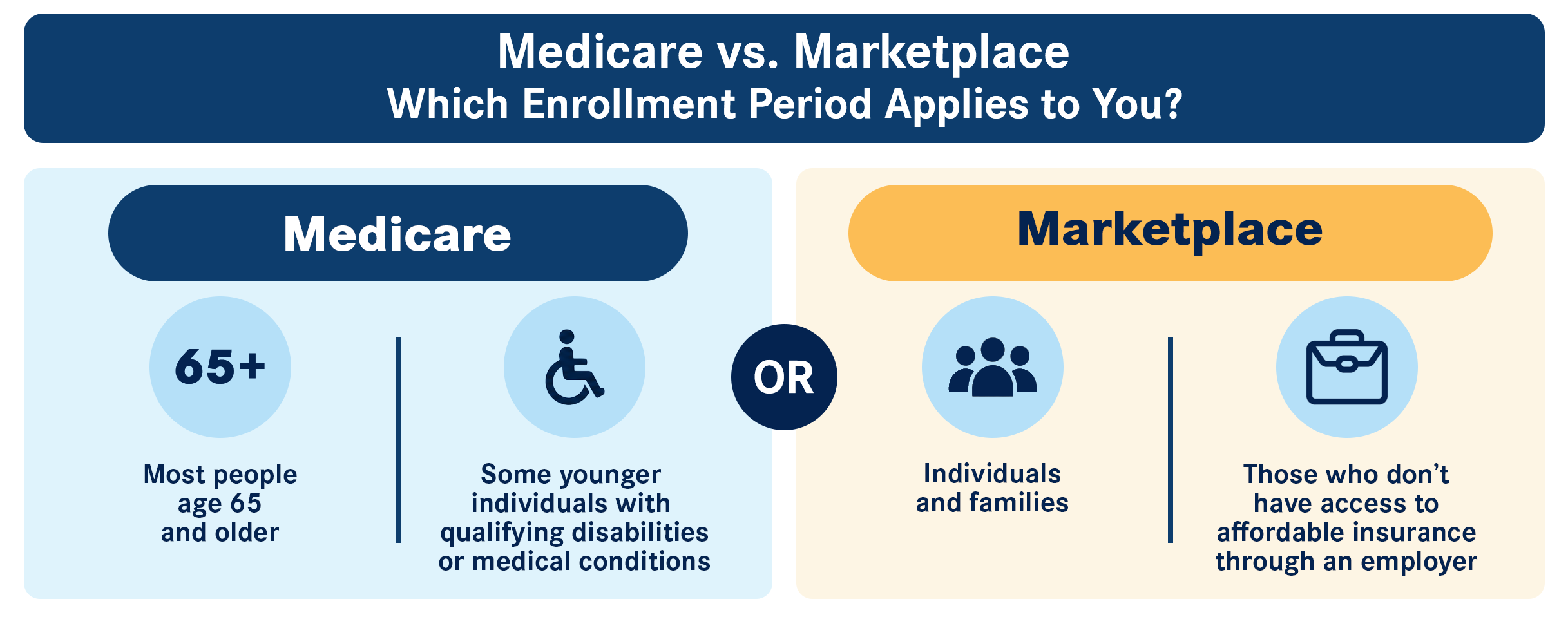
Both offer opportunities to review or change coverage, but their enrollment periods and available plans differ.
When Is Medicare Open Enrollment?
Medicare Open Enrollment, also called Medicare Annual Enrollment, runs from October 15 through December 7 each year.
During this period, you can:
- Switch between Original Medicare and Medicare Advantage.
- Change Medicare Advantage plans.
- Join, switch or drop a Medicare Part D prescription drug plan.
Changes generally take effect January 1 of the following year.
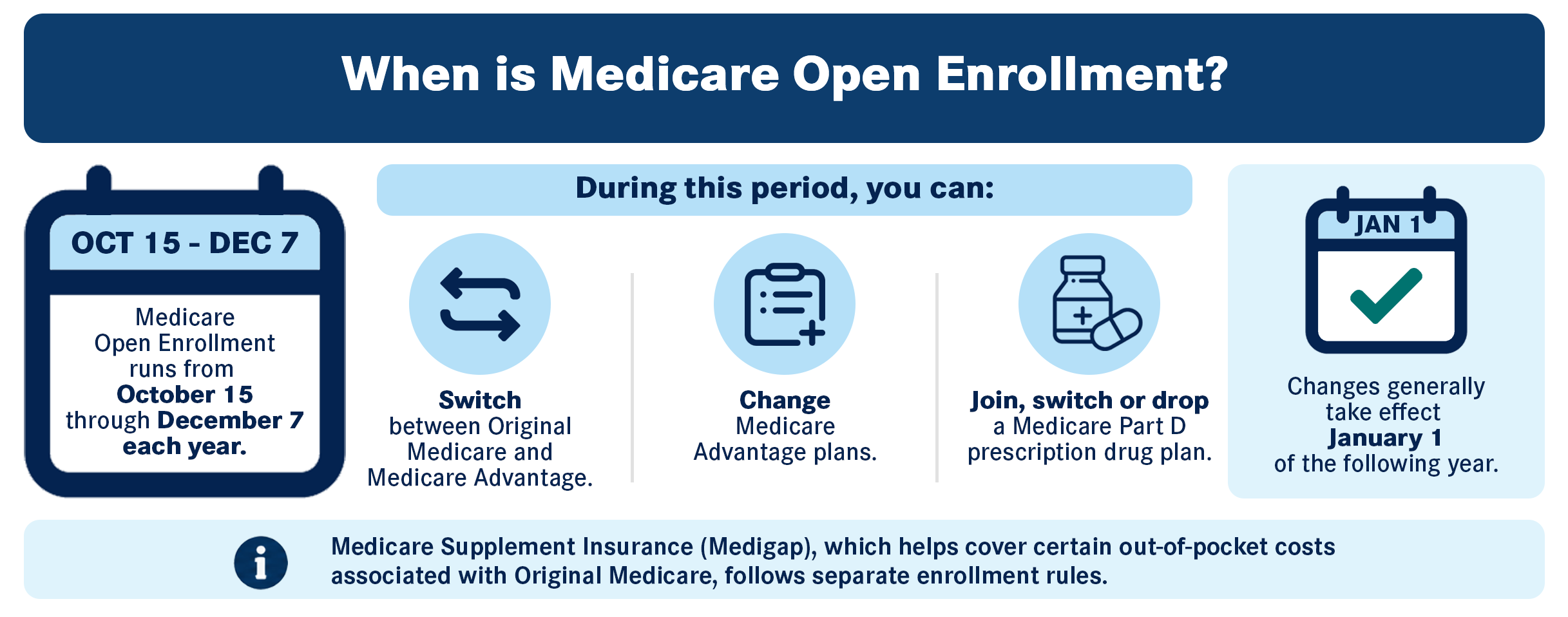
Medicare Supplement Insurance (Medigap), which helps cover certain out-of-pocket costs associated with Original Medicare, follows separate enrollment rules.
Visit medicare.gov/enrollment-periods for more information.
When Is Health Insurance Marketplace Open Enrollment?
For states using HealthCare.gov, Health Insurance Marketplace Open Enrollment generally runs from November 1 through January 15, although state-based Marketplaces may have different deadlines.
During this time, you can enroll in coverage, renew your current plan or compare health insurance plans available in your area.
For the standard HealthCare.gov schedule, these are the key open enrollment dates:
- Enroll by December 15: Coverage begins January 1.
- Enroll December 16 through January 15: Coverage begins February 1.
This enrollment period may be especially important for consumers affected by changes in insurer participation. As some major carriers withdraw from certain Marketplace regions or discontinue specific plans, existing policyholders may need to explore new coverage options.
If your insurer is leaving your Marketplace or discontinuing your plan, pay close attention to any notices you receive. Confirm when your current coverage ends, review the plans available in your area and take action before applicable enrollment deadlines.
These changes don't necessarily mean you'll lose access to health insurance, but they may mean taking a more active role in choosing your next plan.
Visit https://www.healthcare.gov/ to check your state's enrollment dates and available plans.
How Can You Prepare for Open Enrollment?
When preparing for Open Enrollment, there are questions that can help maximize the overall quality and suitability of your coverage.
Ask yourself:
- Is my current plan still available? Check for changes to your insurer's participation or coverage offerings.
- What will I actually pay? Consider premiums, deductibles, copayments and out-of-pocket maximums.
- Can I keep my doctors? Confirm that your preferred providers and hospitals are in-network.
- Are my prescriptions covered? Review medication costs and pharmacy options.
- What are my coverage gaps? Identify expenses your plan may not cover or may require you to pay out of pocket.
A lower monthly premium doesn't always mean lower overall healthcare costs. Looking at the bigger picture can help you choose coverage that better fits your needs and budget.
Even with health insurance, deductibles, copays and other out-of-pocket expenses can add up. Supplemental insurance can provide additional financial protection for certain covered events or expenses, depending on the policy and your state of residence.
While supplemental insurance does not replace comprehensive health insurance, products such as hospital indemnity, accident and critical illness insurance can complement primary health insurance and help with expenses associated with unexpected healthcare events.
Your Open Enrollment Checklist
A little preparation can make the process easier. Before making changes to your coverage, use this checklist to help prepare for open enrollment:
- Gather your information. Review your current policy, prescriptions and preferred healthcare providers.
- Check for changes. Consider premiums, deductibles, copayments and out-of-pocket maximums.
- Compare your options. Evaluate premiums, out-of-pocket expenses and coverage benefits.
- Mark your deadlines. Know when enrollment ends and when your coverage begins.
- Confirm your enrollment. Save your confirmation and verify any required premium payments.
The main goal is to understand your coverage and make sure it continues to meet your needs.
What Happens If You Miss Open Enrollment?
If you miss either deadline, you may still have options.
For Health Insurance Marketplace and Medicare, a Special Enrollment Period (SEP) may allow you to enroll in or change coverage after certain qualifying events, such as losing qualifying health insurance, getting married, having a child or moving.
Medicare also offers Special Enrollment Periods under specific circumstances, although eligibility requirements differ from those of the Marketplace.
For more information, please visit: Medicare SEPs and Health Insurance Marketplace SEPs.
Taking the Next Step With Confidence
Health insurance isn't always simple, especially when costs, coverage options and insurance providers are changing. But understanding your choices can help you feel more prepared for the year ahead.
Open enrollment is an opportunity to look beyond your current plan and consider your overall healthcare and financial circumstances.
At ManhattanLife, we understand that healthcare expenses don't always end where your primary insurance coverage does. Supplemental insurance may help provide additional protection for certain expenses, depending on the policy.
As you review your health insurance options, consider where additional coverage might fit into your financial protection strategy.
Explore supplemental insurance solutions from ManhattanLife on our Products Showcase page, with an array of health and life products designed to support financial security and encourage peace of mind. Whether you're seeking coverage for yourself or your family, we have solutions for safeguarding what matters most.
This article is for informational purposes only. Enrollment dates, eligibility requirements and coverage options may vary. Please consult official government resources for current information.